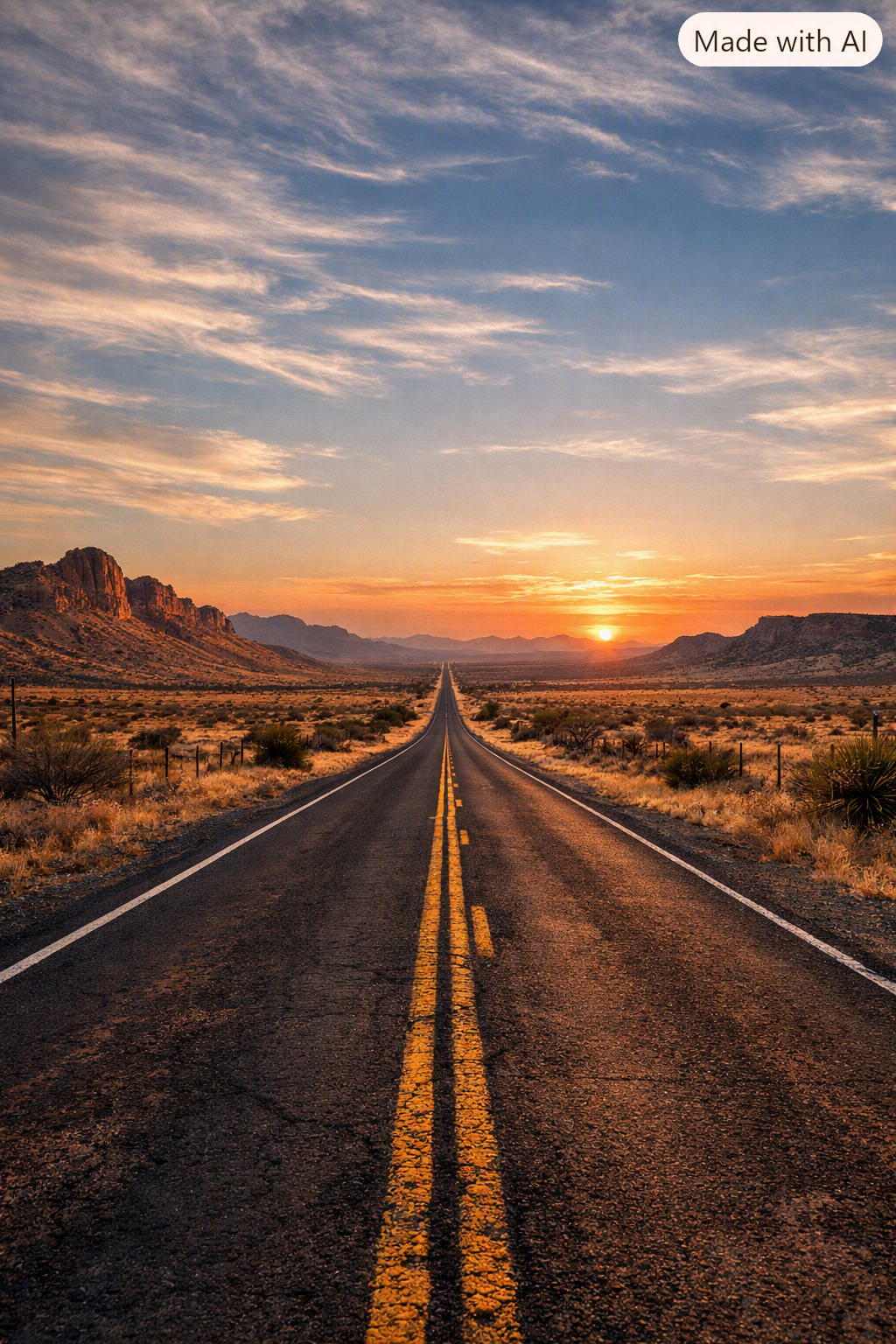
There’s a stretch of Texas that doesn’t brag, doesn’t shout, and doesn’t try to be anything other than what it is — wide, wind‑carved, sun‑bleached, and honest. Central West Texas and West Texas aren’t just regions on a map; they’re a slow‑moving experience, a long exhale, a place where the sky is so big it feels like it’s thinking out loud.
This is the land of two‑lane highways, ghost towns that refuse to die, ranch gates that stretch for miles, and sunsets that look like they were painted by someone who had all the time in the world. If you’ve ever wanted to feel small in the best possible way, this is where you go.
And if you’re starting from Menard — the quiet heart of the region — you’re already halfway into the story.
Menard: The Gateway to the Quiet West
Menard is where the Hill Country begins to loosen its grip and the West starts to take over. The limestone gives way to open plains, the air gets drier, and the horizon stretches out like it’s trying to tell you something.
Grab a breakfast taco, fuel up, and head west. The road doesn’t rush you — it invites you.
Junction, Sonora, and the Slow Slide Into the Desert
As you push toward Sonora, the landscape shifts. Mesquite thickens, the wind picks up, and the sky starts to feel heavier. Sonora is one of those towns that’s small but sturdy — a ranching hub with a proud history and a pace that never pretends to be fast.
From here, the road becomes a ribbon through ranch country. You’ll pass windmills, cattle guards, and the occasional herd of goats that stare at you like you’re interrupting something important.
This is the warm‑up. The real West begins when you hit Sanderson.
Sanderson: The Last Real Stop Before the Empty
Sanderson is the kind of town that feels like a movie set — not because it’s fake, but because it’s too real. It’s quiet, sun‑baked, and honest. The trains roll through, the wind whistles between the buildings, and the locals know every face that passes through.
This is where you feel the shift. The air gets thinner. The land gets wider. The silence gets louder.
Sanderson is the “last chance” town — last chance for fuel, last chance for snacks, last chance to remind yourself that civilization is still a thing. Because once you leave, you’re heading into one of the most beautiful stretches of highway in Texas.
Marathon: The Desert’s Front Porch
Marathon is small, artistic, and unexpectedly charming. It’s the kind of place where you can get a gourmet meal, a handcrafted coffee, and a conversation with someone who moved here from New York “just to breathe.”
The Gage Hotel stands like a desert cathedral — historic, elegant, and glowing at night like a lantern in the dark.
Marathon is also the unofficial gateway to Big Bend National Park, and you can feel it. The mountains start rising in the distance. The air cools at night. The stars sharpen.
If you stay the night, step outside after sunset. The sky here is so clear it feels like you’re looking through glass.
Alpine: The Beating Heart of the Big Bend Region
Alpine is the biggest small town in West Texas — a college town, an art town, a railroad town, and a traveler’s town all at once. It’s where people gather before scattering into the desert.
You’ll find murals, bookstores, coffee shops, and the kind of friendly faces that make you feel like you’ve been here before. And yes — Alpine has a Hilton. Because even the big hotel chains know that Alpine is the anchor of the region.
From Alpine, you can go anywhere:
- Marfa for art and surreal desert vibes
- Fort Davis for mountains and observatory nights
- Terlingua for ghost town magic
- Big Bend for the kind of landscapes that make you rethink your entire life
But Alpine itself deserves time. Walk its streets. Eat at its diners. Watch the trains roll through. It’s a town that feels alive in a way only remote towns can — a pulse in the middle of nowhere.
Fort Davis: Mountains, Observatories, and Old Frontier Spirit
Fort Davis is where the desert suddenly decides to grow mountains. The Davis Mountains rise up out of nowhere, cool the air, and create one of the most beautiful pockets in Texas.
The town is historic, quiet, and deeply Texan. The old fort still stands, the state park is stunning, and the McDonald Observatory sits high above everything like a crown.
If you’ve never seen a West Texas star party, put it on your list. The sky here is so dark it feels infinite.
Marfa: Art, Mystery, and the Desert’s Strange Glow
Marfa is weird — in the best possible way. It’s a blend of high art, desert minimalism, ranch culture, and cosmic mystery.
You can spend the day exploring galleries, sipping espresso, or wandering the desert installations. And at night, you can drive out to the viewing area and watch the Marfa Lights dance across the horizon.
Marfa doesn’t explain itself. It doesn’t need to.
Why This Region Feels Different
Central West Texas and West Texas aren’t about attractions — they’re about atmosphere.
They’re about:
- Long drives with no traffic
- Sunsets that swallow the sky
- Stars that look close enough to touch
- Small towns that feel like old friends
- Landscapes that make you quiet inside
This region is for travelers who want to feel something — not rush something.
It’s for people who want to breathe, think, wander, and reconnect with the part of themselves that gets drowned out in busy places.
A Road Trip That Stays With You
Whether you’re exploring Alpine’s murals, standing alone on a highway outside Sanderson, watching the mountains rise in Fort Davis, or sipping coffee in Marathon, you’ll feel it — that West Texas stillness.
It’s not empty. It’s full of something you can’t find anywhere else.
And once you’ve driven it, once you’ve stood in that quiet, once you’ve watched the sun drop behind the desert, you’ll carry it with you.
West Texas doesn’t just give you memories. It gives you perspective.
Leave a Reply